
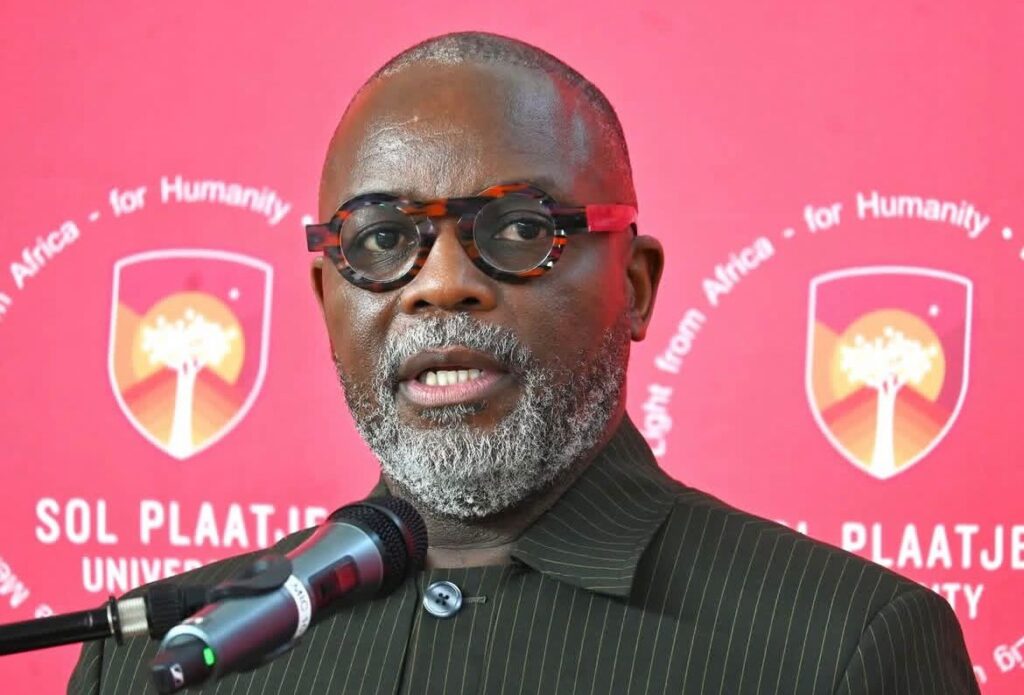
The new Chancellor of Sol Plaatje University, Thebe Ikalafeng, delivered a thought-provoking address at the AUC Conference in Kimberley calling for what he described as a “new compact” between universities, industry, and government. His message combined optimism with a firm challenge, urging stakeholders to rethink how higher education aligns with the realities of the modern economy.
At the core of Ikalafeng’s proposal are four structural shifts that he believes are essential if South Africa’s universities are to produce graduates who are truly prepared for the labour market. He emphasized that without meaningful reform, institutions risk falling behind in a rapidly evolving economic landscape.
The first shift focuses on strengthening collaboration between universities and industry. Ikalafeng stressed the importance of establishing genuine industry advisory councils within every university. According to him, these councils would ensure that academic programmes remain relevant and responsive to the needs of the economy. By doing so, graduates would be better equipped with practical skills and knowledge that align with real-world demands.
Secondly, he highlighted the need to expand work-integrated learning. Ikalafeng argued that practical experience should no longer be treated as an optional addition but rather as a standard component of university education. Embedding internships, apprenticeships, and workplace exposure into academic programmes would bridge the gap between theory and practice, ultimately enhancing employability.
Ikalafeng also directed a clear message to the private sector, urging businesses to move beyond passive involvement. He called on companies to play an active role in shaping the future workforce by partnering with institutions, offering mentorship opportunities, and contributing to curriculum development. This collaborative approach, he suggested, would benefit both employers and graduates.
In addition, he warned against overreliance on government funding mechanisms such as the National Student Financial Aid Scheme (NSFAS). While acknowledging its importance, Ikalafeng argued that sustainable funding for higher education requires broader participation from multiple stakeholders, including industry and philanthropic organisations.
Finally, he called for reforms to the country’s skills development framework, particularly the operations of Sector Education and Training Authorities (SETAs) and the broader skills levy system. He believes these structures must evolve to better support workforce development and align with current economic needs.
Ikalafeng’s address ultimately underscored a shared responsibility among universities, industry, and government to collaborate more effectively in shaping South Africa’s future workforce. Ikalafeng Urges New Higher Education Compact
Thebe Ikalafeng, delivered a thought-provoking address at the AUC Conference in Kimberley, calling for what he described as a “new compact” between universities, industry, and government. His message combined optimism with a firm challenge, urging stakeholders to rethink how higher education aligns with the realities of the modern economy.
At the core of Ikalafeng’s proposal are four structural shifts that he believes are essential if South Africa’s universities are to produce graduates who are truly prepared for the labour market. He emphasized that without meaningful reform, institutions risk falling behind in a rapidly evolving economic landscape.
The first shift focuses on strengthening collaboration between universities and industry. Ikalafeng stressed the importance of establishing genuine industry advisory councils within every university. According to him, these councils would ensure that academic programmes remain relevant and responsive to the needs of the economy. By doing so, graduates would be better equipped with practical skills and knowledge that align with real-world demands.
Secondly, he highlighted the need to expand work-integrated learning. Ikalafeng argued that practical experience should no longer be treated as an optional addition but rather as a standard component of university education. Embedding internships, apprenticeships, and workplace exposure into academic programmes would bridge the gap between theory and practice, ultimately enhancing employability.
Ikalafeng also directed a clear message to the private sector, urging businesses to move beyond passive involvement. He called on companies to play an active role in shaping the future workforce by partnering with institutions, offering mentorship opportunities, and contributing to curriculum development. This collaborative approach, he suggested, would benefit both employers and graduates.
In addition, he warned against overreliance on government funding mechanisms such as the National Student Financial Aid Scheme (NSFAS). While acknowledging its importance, Ikalafeng argued that sustainable funding for higher education requires broader participation from multiple stakeholders, including industry and philanthropic organisations.
Finally, he called for reforms to the country’s skills development framework, particularly the operations of Sector Education and Training Authorities (SETAs) and the broader skills levy system. He believes these structures must evolve to better support workforce development and align with current economic needs. Ikalafeng’s address ultimately underscored a shared responsibility among universities, industry, and government to collaborate more effectively in shaping South Africa’s future workforce.
