
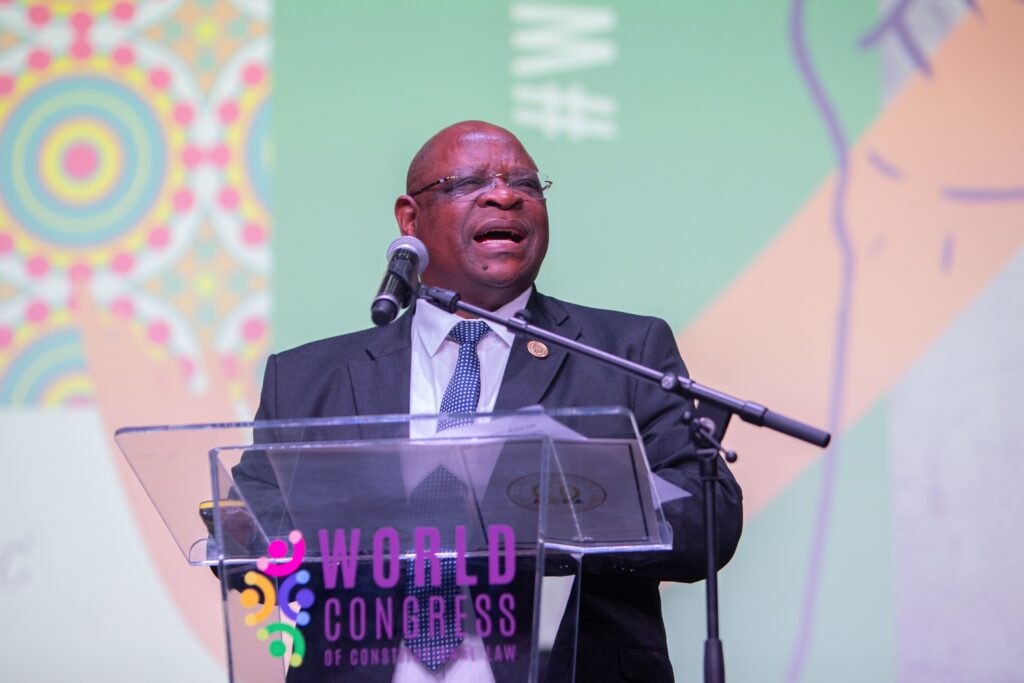
Chief Justice Raymond Zondo set forth on a mission to transform South Africa’s judicial system. On Wednesday, CJ Zondo launched a programme that will help women to become judges.
This latest initiative was inspired by two female judges who graced the bench at the dawn of democratic rule in 1994. Yet even then, women comprised only 1% of this profession.
Today, however, things have changed dramatically. At least 45% of women make up the judiciary ranks with significant black representation.
In 2007, former Justice Minister Brigitte Mabandla spearheaded the first Aspirant Women Judges Programme, which welcomed 21 candidates, 12 of whom were appointed judges. The Brigitte Mabandla Aspirant Women Judges Programme provides education and training to aspiring judges (particularly women).
By participating in this programme, women lawyers have the opportunity to hone their judicial skills in preparation for possible bench appointments. The year-long programme will equip women from the legal fraternity with the tools they need to become judges.
Chief Justice Zondo stated in this keynote speech that South Africa’s judiciary has significantly improved. However, there is still a way to go.
“I am excited because of the launch of this programme. This programme has been delayed for a long time. The first one happened in 2007, during the term office of Minister Bridget Mabandla,” Zondo said.
After years of waiting, the government finally relaunched its second programme, allowing many ambitious candidates to fulfill their dreams. “Twenty one candidates took part in that programme, and twelve of them are now judges. The programme was a great success. So I take this opportunity to pay tribute to Brigitte Mabandla, who spearheaded this programme,” he said.
“A question that may be asked is why we need this programme. To some extent, the answer to the question belongs to the same category as the answer to questions like why we need Black Lawyers Association. Why need The South African Chapter of the International Association of Women Judges? We need these programs because we are a society like many other countries, which has a history of denying women opportunities,” he said.
The 2023 cohort for the programme has 15 candidates with at least 12 years of experience as legal practitioners. Candidates were selected following a rigorous process involving applications, judgment writing assignments, and interviews. Seasoned judges on various topics will present lectures and presentations as part of the programme.
