
Due to limited financial resources, most small businesses in South Africa fail to protect their inventions. That’s why entrepreneurs should view IP as an asset, and a way for their businesses to increase revenue and employment, and contribute to the country’s economy.
If you are thinking of turning your novel idea into business, you may well want to consider protecting it by enlisting the help of an attorney specialising in Intellectual Property (IP).
According to the World Intellectual Property Organisation (WIPO), a global organisation for intellectual property, the African continent accounts for 0.5% of global patent filings each year. In 2019, for instance, there were only 1,514 patents, 35,017 trademarks, and 3,436 designs that were recorded from South Africa.
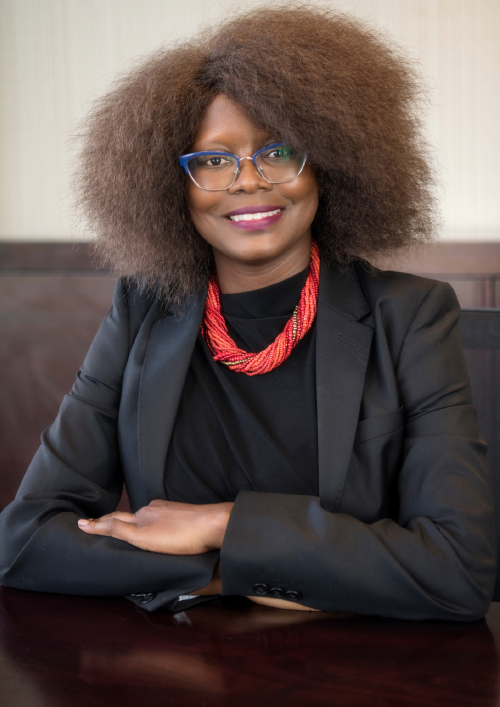
Nthabisheng Phaswana understands intellectual property better than many. She is a legal practitioner specialising in patent and design protection in Africa and she is actively involved in fostering relations between her firm, Adams and Adams and the IP Registrars of various African countries. Phaswana’s academic background is impeccable. She graduated with an LLB and LLM (Mercantile Law) from the University of Pretoria. Upon completing her articles, she was admitted as an attorney and started working right away.
In 2007, Phaswana joined Adams and Adams and soon became a partner in the Africa patents department. Over the course of her career, she has filed many patents and design applications and worked with many businesses. “I advise businesses, innovators and inventors on how they can protect their ideas. In essence, what I do is to ensure that our client’s designs and patents are protected throughout Africa,” Nthabisheng tells Transform SA.
Integrity is a universal value in business; a ubiquitous way of fostering relationships, trust, and building a good reputation. Nthabisheng is quick to point out that being alert and honoring her word holds real significance in her career. “I have to be aware of all the small things you can think of, if there is unrest in one country it affects systems that we have here in South Africa. If there are political changes, I have to be aware of them, if there is a new IP ACT that is promulgated, I have to be aware of it too,” she explains.
In the South African context, IP law encompasses patents, designs, trademarks, copyright and domain name protection. Put differently, any asset created by a human that can be exploited by third parties can be protected by IP rights. “IP is not a strange phenomenon in Africa and in South Africa. If you look into history, the first piece of legislation that had to deal with a little bit of IP was in 1854,” recalls Phaswana.
Over the past years, company mergers and acquisitions have thrust IP into nan increasingly critical position in global economics. “Before investors put money into an economy of a country they want to know if they will be able
to protect their intellectual property and enforce it against others, hence you see governments becoming members of international treaties that regulate how we should protect intellectual property,” she says.
According to Phaswana, there are instances when she needs to deal with somebody who is not in SA but has rights registered on the African continent. “Intellectual property is part of business; you cannot talk about business
without talking about intellectual property. Business and intellectual property go hand in hand, it is important for a business to protect what they come up with,” says Phaswana.
“Awareness of IP rights in South Africa is not where it should be, for a developing country that is trying to move away from an economy that is based on resources to a knowledge-based economy. We are not fully cognisant of how far-reaching the role of IP is. When you compare us to the rest of world, we are still lagging behind. The level of awareness is not satisfactory in light of what the country is trying to do and achieve We need to use IP in a way that benefits individuals, business, and the country,” she concludes.
Due to limited financial resources, most small businesses in South Africa fail to protect their inventions. Phaswana advises entrepreneurs to view IP as an asset, and a way for their businesses to increase revenue and employment, and
contribute to the country’s economy. Also, government offers support in the form of incentives that growing businesses can tap into. On transformation, Phaswana says “We shouldn’t lose focus that we want the IP sector to be
representative of the demographic of South Africa. We have to plan and action items that will enable our people to partake in this sector. As law practitioners we should go back to our universities and start to create awareness from
there. We need to open up the sector at the bottom because if you are exposed to this industry earlier on you will be empowered. We need to transform from grass root level in order to level the playing field,” she explains.
Some of the IP solutions that are out there you should be aware of include:
• Trademark – a symbol, word or words registered established by use to represent goods or services. Trademarks are essentially everywhere on tangible products like Sasko, Coca-cola, etc.
• Patents are exclusive right to a monopoly around an invention.
• Design – protects the shape and configuration of an article. For instance, if you look at mobile phones they have different shapes, you also look at cars that have different shapes, different shapes of the wheels, and so on.
• Copyright – this is mainly about literary artistic works, architectural plans, drawings, photographs, etc and computer programs for example.
