
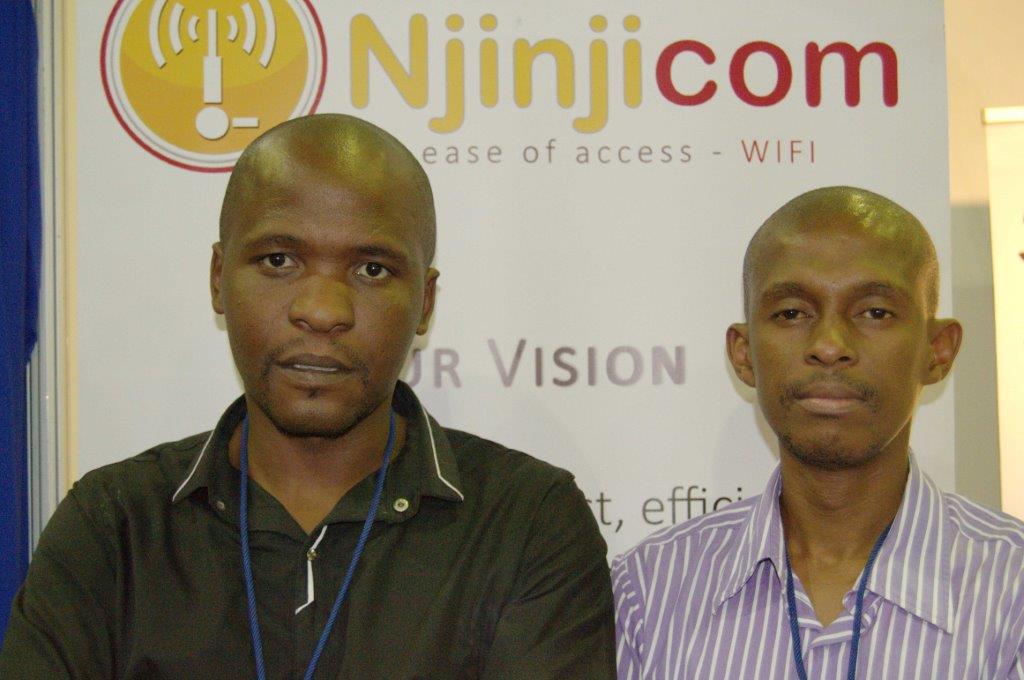
Njinjicom is on a mission to ensure that as many of the country’s households as can be practically possible have internet at their fingertips. The company recognises that one of the greatest obstacles to successfully transforming the country – that is addressing the wide economic imbalances that the system of apartheid created – is lack of access to information. Yet, the most convenient means of accessing information is through the internet, of which the majority of households are deprived of.
Research which Njinjicom concluded recently confirmed a worse scenario than it has been generally assumed. According to the findings, even though statistics say 40% households have internet access, what is ignored is that almost three quarters of that number can only access it at the office or restaurants. Worse still, the fact that the cost of data from cellphone companies does not come any cheap creates even more access barriers.
“Glaringly, as long as the country’s majority has little or no internet access to access critical information to participate in economic development, it would be farfetched to expect the country to be transformed. Model countries like Singapore have achieved phenomenal economic development by giving people access to information, which gives them knowledge to tackle their challenges,” say Lucas Luthuli, the the director of Njinjicom.
The Diepkloof and Orlando East-based business, which started trading three years ago originally with four director, provides internet for previously disadvantaged communities, which have low disposal income.
Njinjicom installs affordable wi-fi internet access during events which draw huge crowds. This helps the organisers disseminate vital information about the event and the public access affordable internet. Through its association with Iburst, Njinjicom is able to provide cheaper data rates compared to big networks.
Luthuli mentions sustainable pricing as the company’s main problem. The equipment that the company uses is expensive and, at times, reluctantly the company passes the cost onto the customer.
“Circumstances permitting, we always go for equipment which costs less,’ Luthili says, acknowledging that sometimes cheap equipment compromises the quality of the service provided.
That is the dilemma Njinjicom is accustomed to facing – something other small businesses can relate – the challenge of balancing between affordable services without compromising on the quality of the end-product. “It’s quite delicate…providing poor work is the last thing we want,” he says matter-of-factly.
And to manage the resource limitations, Njinjicom has learnt to operate within its means, taking each investment shrewdly. “We don’t want to chew more than we can swallow,” says Luthuli.
What gives the company a competitive edge over its peers in the ICT space is that it is in able hands. Hands-on Luthuli is a qualified photographer and an installer of access points. Probably, this human resource is the company’s priceless asset.
Njinjicom sees itself complementing government’s free WI-FI internet programme in selected areas. And, it must be said, it will be fulfilling a noble cause.
Government is overburdened with many challenges and its resources are stretched and it would be incredible to expect to provide service to every South African. That is where the private sector players have to fill the gap. And, as a small business, Njinjicom wants to play some part.
With the objective of providing affordable internet access in low-income areas, the company looks at its business scope beyond the provision of affordable Wi-Fi internet during events. “We aspire at becoming the people’s internet partner, develop and deliver services through which people can accumulate knowledge which can make a difference to their lives,” Luthuli declares.
